
Paper is everywhere at the university, from scribbled down notes in a lecture to million-pound contracts being signed. These physical copies are essential for the university to run as smoothly as it does, but when the need arises for them to be digitised, they can cause a large bottleneck with manual transcription being slow and inefficient. One area this bottleneck is present is during the exam period.
For students, exams are often the most stressful part of the year, the culmination of years of work and their relief when leaving the exam is palpable. However, whilst the students have finished their work and often wish to forget about the exam as fast as possible, this kicks off a huge workload for the examiners. Exam papers need to be collected and sorted; attendance needs to be checked and collated.
Current Process
Currently the process of recording exam attendance is manual and laborious. Students fill in an attendance slip at the beginning of an exam marking their presence, then, once the papers are collected at the end of the exam, the examiners mark the collection of each student’s paper. Finally, these slips are passed on to be digitised, with each row being manually inputted into a central university system.
The requirement for correctness and accuracy in this process cannot be downplayed. However, with over 2000 attendance sheets being filled in over the course of an exam period, the man-hours involved in the digitisation are huge. If every sheet takes 10 minutes to transcribe, that’s over 300 hours spent making these records digital.
Recognising this as just one of many university processes that could quickly benefit from an AI powered remodelling, the university’s IT Innovation Team set out to explore what it would look like to implement a more efficient, less laborious method.
How have we improved this?
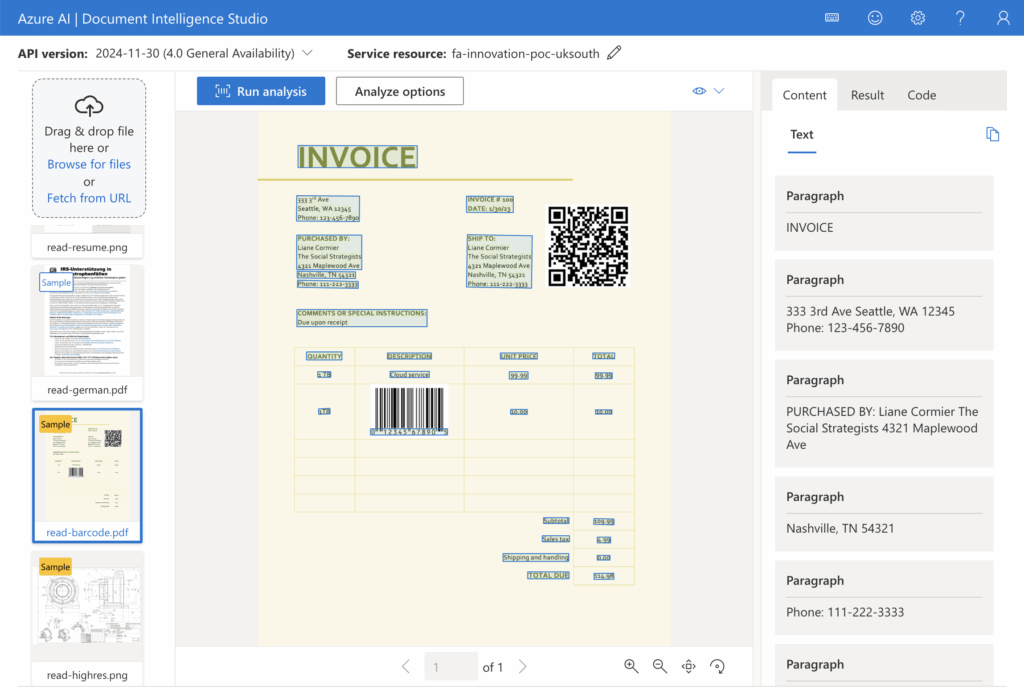
The primary bottleneck, and the lowest hanging fruit in terms of improvement, is the manual digitisation of attendance slips. With the fixed structure of the sheet, containing a student’s information, where they were sat and whether they’d attended, this problem is perfectly solved by Azure’s Content Understanding model. This is an AI powered model that extract information from an otherwise messy, unusable data source. Among many other use cases, the model can pick out fields from a scanned document and return it in a format that can then be uploaded to a database for storage and querying.
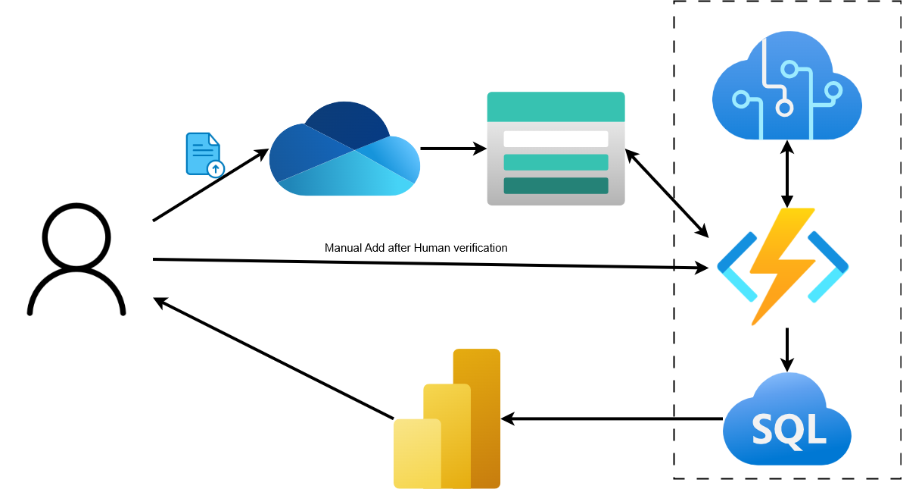
The team built a workflow to take in scans of the registers uploaded to OneDrive, run them through a custom Content Understanding model, picking the data out for each student, and then upload the data to a database (Figure 1). Any rows where the model is not certain of the output are flagged for human checks, ensuring that we can be confident every student’s attendance is marked correctly every time. This human feedback loop is key and gives us feedback on the accuracy of the model.
Once the model has run the examiner is able to view the exam’s attendance in a PowerBI dashboard as well as viewing a student’s attendance across multiple exams. The flexibility of a PowerBI dashboard also allows the examiner to examine any metrics they wish without having to manually query the database.
Figure 1. The AI exam register digitisation workflow
Overview
This is just one example of how the University could use AI take a slow, manual, paper-driven process and turn it into a streamlined, reliable workflow. This will save examiners hundreds of hours and reduce their stress by having the attendance online within minutes, not days, of the exam. The IT Innovation team is committed to improving workflows like this throughout the university so if you have a similar situation, or any other ideas for a technology that supports teaching, learning, or related administration, please reach out to the team. We are eager to explore new and interesting problems to solve.